Why is water dripping from my ceiling after it rains in Seattle
Water dripping from your ceiling after rain in Seattle almost always means your roof is leaking. Here's why it happens and what to do next.
Water dripping from your ceiling after rain in Seattle WA is almost always a roof leak - not a plumbing problem. Rainwater is getting past your roof covering, traveling along a rafter or sheathing panel, and finding the lowest point to drip through your ceiling. The leak source and the drip are rarely in the same spot. The rest of this article explains what causes it, how to stop the damage right now, what repairs cost in 2026, and when it's time to call us.
Why water dripping from your ceiling after rain in Seattle WA is almost always a roof leak
Water dripping from your ceiling after rain in Seattle WA is a symptom of water intrusion through the roof assembly - the shingles, underlayment, flashing, and penetrations that keep rain out of your attic. If the drip only happens when it rains, plumbing is off the table. Supply lines and drain pipes don't care about the weather.
Here's the part that surprises most homeowners: the water enters high and exits low. A failed pipe boot on the north slope can travel 15 feet down a rafter before it drips through a ceiling near your kitchen. That's why finding the entry point matters more than patching the wet spot. If you just spackle the ceiling, the next storm finds the same path.
We see this constantly in Seattle's older housing stock. A 1920s Craftsman in Wallingford with original skip sheathing and 30-year-old three-tab shingles behaves nothing like a 2015 townhome in Ballard with a synthetic underlayment and architectural shingles. Both can leak. They leak for different reasons.
The most common causes of a ceiling leak after rain in Seattle
After thousands of roof inspections across Seattle, these are the causes we find most often when a homeowner calls about a ceiling leak after rain in Seattle:
- Failed pipe boots and vent flashing. The rubber collar around a plumbing vent cracks after 10-15 years of UV exposure. Water runs straight down the pipe and into the attic.
- Chimney and sidewall flashing. Galvanized step flashing rusts through. The tar that sealed it dries and pulls away. This is the number one source of leaks on older Seattle homes.
- Missing or lifted shingles. Wind-driven rain from a November storm pushes water under a lifted tab. You won't see it from the ground.
- Clogged gutters backing water under the roof edge. When a gutter fills with fir needles - and Seattle has plenty - water wicks backward under the drip edge and into the fascia.
- Skylight seals. A 20-year-old skylight on a Queen Anne craftsman has a curb flashing and a glass seal that both degrade. Skylight leaks show up as ceiling stains within 3 feet of the unit.
- Moss and debris dams. Moss holds moisture against the shingle surface and lifts the leading edge of the course below. Water gets underneath.
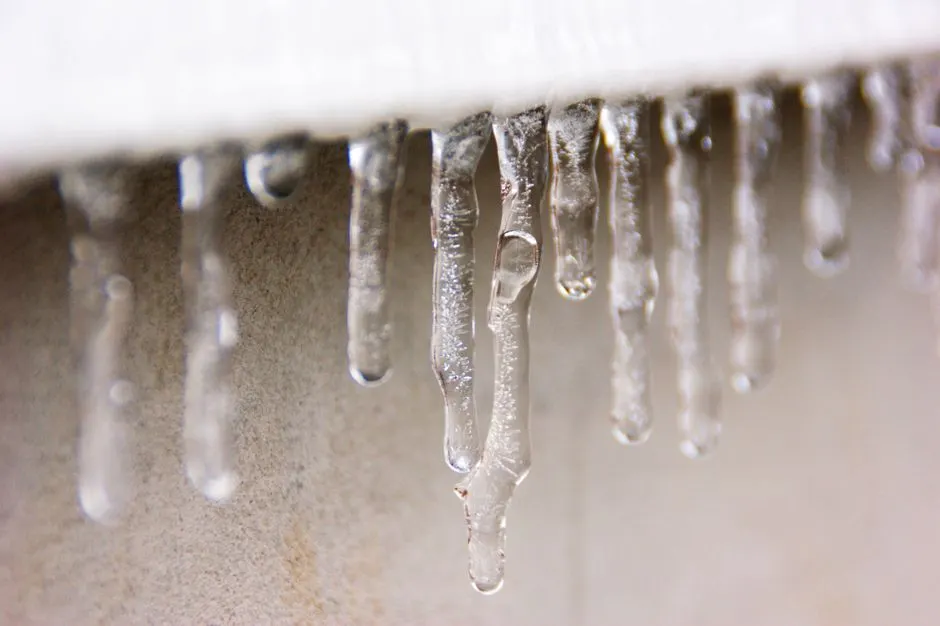
- Ice dams. Less common here than in the Midwest, but a February freeze after a wet January can create a dam at the eave and force water inside.
If your ceiling drip shows up near a bathroom vent, a furnace flue, or a chimney, the odds are high that flashing is the culprit. If it shows up at an exterior wall, suspect step flashing or a gutter issue. If it's in the middle of a room with no penetration above, you're likely looking at a field shingle failure or a compromised underlayment.
Why Seattle's climate makes ceiling leaks worse than most cities
Seattle averages about 37 inches of rain per year, but the number that matters for your roof is rain days: roughly 150 days with measurable precipitation. That's 150 chances per year for water to find a weak point. A roof in Phoenix gets tested a dozen times. Yours gets tested constantly.
Our wet winters also mean roofs stay damp for months. Moss spores germinate on north-facing slopes in October and spread through the rainy season. By March, a moss mat can lift shingle edges enough to let water in. That's why we treat Roof Moss Removal Seattle WA as a leak-prevention service, not just a cosmetic one.
Add our tree canopy - Douglas fir, cedar, and big-leaf maple - and you get needles and leaves in every valley and gutter. A gutter that drains fine in August can back up by the second week of November. When it does, water pools at the eave and works its way under the first course of shingles.
The neighborhoods with the oldest housing stock see the most ceiling leaks. If you own a home in Capitol Hill Roofing territory - where many houses date to the 1900s-1920s - your roof has probably been re-roofed three or four times, and each layer adds weight and hides the flashing condition underneath.
How to stop a ceiling leak from your roof in Seattle Washington right now
When water is actively dripping, your first job is to contain the damage, not fix the roof. Here's the sequence we walk homeowners through on the phone:
- Move furniture and electronics out of the drip zone. Water spreads across a ceiling and can travel along a joist before it drops.
- Place a bucket and a towel. If the drip is fast, a 5-gallon bucket with a trash bag liner makes cleanup easier.
- If the ceiling is bulging, puncture it. A small hole with a screwdriver releases trapped water and prevents a larger collapse. Aim for the center of the bulge.
- Kill the power to that room if water is near a fixture. Don't touch a wet ceiling fan or recessed light until the breaker is off.
- Document everything. Photos of the drip, the ceiling stain, and any damaged belongings help with an insurance claim.
- Call for emergency ceiling leak repair near me Seattle WA. The longer water sits in insulation and drywall, the more likely you are to deal with mold.
What you should not do: climb onto a wet roof in the rain. Every year we hear about a Seattle homeowner who slipped on a wet composite shingle trying to tarp a leak in the dark. It's not worth it. We tarp roofs safely and come back in dry weather to make the permanent repair.
If you can see the leak source from inside the attic - a wet rafter, a stained sheathing panel, a drip at a pipe boot - take a photo. That single photo can save 30 minutes of diagnostic time when we arrive.
How much does ceiling leak repair cost in Seattle WA in 2026?
Typical 2026 pricing in Seattle for ceiling leak repair breaks into two parts: the roof repair and the interior ceiling repair. Here's what we see:
- Roof leak diagnosis and minor repair (pipe boot, small flashing): $350-$750.
- Flashing rebuild at a chimney or sidewall: $600-$1,400.
- Section re-roof around a leak (10x10 area): $900-$2,000.
- Emergency tarp and after-hours response: $400-$900.
- Interior drywall patch and paint (per ceiling area): $300-$800.
- Mold remediation if the leak has been active for weeks: $1,200-$3,500.
Those ranges assume a single leak source and a roof that's otherwise in serviceable condition. If your roof is 22+ years old with three layers of shingles, a spot repair may not make sense. We'll tell you that on the first visit and give you a straight comparison against a full Roof Replacement Seattle WA.
Homeowners insurance in Washington typically covers sudden, accidental water damage from a roof leak - the interior damage, in other words - but not the roof repair itself if the cause is wear and tear or lack of maintenance. We'll document the cause with photos so your adjuster has what they need.
Common mistakes homeowners make with water damage from a roof leak in Seattle
The most expensive ceiling leak mistakes we see are not the leaks themselves - they're the decisions made in the first 48 hours.
- Painting over the stain. Stain-blocking primer hides the evidence but not the moisture. The next rain brings it back, often worse.
- Assuming it's a plumbing leak. If the drip correlates with rain, it's a roof issue. Calling a plumber first wastes a service call.
- Waiting for a dry week. In Seattle, that could be April. Mold grows in 24-48 hours of sustained moisture, and wet insulation loses R-value fast.
- Letting a handyman seal the roof from a ladder. Roof leaks are diagnosed from the attic side and repaired from the roof side. A tube of roof cement from the ground rarely fixes the actual entry point.
- Ignoring a second leak. If one pipe boot failed, the other three on your roof are the same age. We check them all on the same visit.
One more: don't run a space heater directly against a wet ceiling. It can crack the drywall and won't dry the cavity behind it. Air movement and a dehumidifier do more good.
When to call a professional for a roof leak causing ceiling drip in Seattle
Call a professional the moment you see water dripping from a ceiling after rain in Seattle. That's the honest answer. A ceiling drip means water has already crossed the roof deck, the underlayment, and the insulation. Every hour it continues, the damage widens.
Specific situations that need same-day attention:
- Active dripping during or right after a storm.
- A ceiling that's bulging, sagging, or soft to the touch.
- Water near a light fixture, outlet, or smoke detector.
- A musty smell in the room, which signals mold growth.
- Any leak on a roof older than 15 years.
At Seattle Roofing, we start with a full Roof Inspection Seattle WA - attic side and roof side - to find the actual entry point, not just the drip. Then we give you a written scope and price before we start. If the fix is a $450 pipe boot, that's what we'll tell you. If the roof is at end of life, we'll show you the photos and let you decide.
We work across the city, from Ballard Roofing jobs on 1920s bungalows to newer construction in West Seattle. Same process every time: find the leak, fix it, test it with a hose before we leave.
Frequently Asked Questions
Why is water dripping from my ceiling after it rains in Seattle?
Rainwater is entering your roof assembly through a failed flashing, pipe boot, shingle, or skylight seal, then traveling along a rafter and dripping through your ceiling. The drip point is usually 5-15 feet from the actual entry point. It is a roof leak, not a plumbing issue.
How do I fix a ceiling leak from my roof in Seattle WA?
Contain the water first - bucket, towels, and puncture a bulge if one exists. Then call for professional roof leak repair. A permanent fix requires finding the entry point from the attic and roof side, which usually takes 1-3 hours for a straightforward flashing or boot repair.
Who do I call for ceiling water damage in Seattle?
Call a licensed roofing contractor first to stop the water source, then a drywall or restoration pro for the interior. If mold is present, a certified remediator handles that step. We handle the roof side and coordinate the rest so you're not making three separate calls.
Does homeowners insurance cover ceiling leaks in Seattle Washington?
Most Washington policies cover sudden interior water damage from a roof leak - typically $2,000-$10,000 depending on your coverage - but not the roof repair itself if wear and tear caused it. Document the leak with photos and call your adjuster within 24-48 hours.
How much does ceiling leak repair cost in Seattle WA?
In 2026, expect $350-$750 for a minor roof repair like a pipe boot, $600-$1,400 for flashing work, and $300-$800 for interior drywall and paint. Emergency tarping runs $400-$900. Total cost depends on how long the leak has been active.
Get help with Roofing in Seattle
If water is dripping from your ceiling right now, we can be there today. We find the leak, fix it, and test it before we leave - with upfront pricing before any work starts.
Call Seattle Roofing at (844) 468-1599 for 24/7 ceiling leak repair in Seattle WA.